Net wrap plays a critical role in modern Australian agriculture, particularly in hay and silage production across large-scale grazing regions in states such as New South Wales, Victoria, Queensland, and Western Australia. As weather variability increases and harvesting windows become tighter, farmers are relying more on efficient bale handling systems to preserve forage quality and reduce losses. In this context, net wrap has become an essential consumable in round balers, offering faster bale tying, improved weather protection, and more stable storage compared to traditional twine methods.
This article explores how net wrap is used in Australian farming systems, its benefits, selection considerations, and practical tips for maximising bale quality under local conditions.
Understanding Net Wrap in Australian Farming Systems
In Australian hay production, timing is everything. Dry spells can be short, and unexpected rainfall can significantly reduce feed value. This is where net wrap provides a clear advantage.
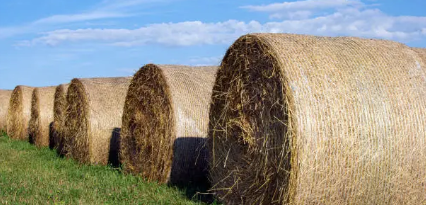
Net wrap is a polymer-based material applied during the baling process to secure compressed hay or straw into a tight, uniform bale. Unlike twine, which wraps in narrow strands, net wrap covers the bale surface more evenly, helping maintain shape and reducing air ingress.
Across broadacre farms in regions like the Riverina or Darling Downs, the use of net wrap has become standard practice because it reduces baling time and improves throughput during peak harvest periods. Farmers often report fewer stoppages and more consistent bale density when using net systems.
Key Benefits of Net Wrap for Australian Conditions
1. Faster Baling Operations
Time efficiency is critical during Australian harvest seasons. Using net wrap reduces wrapping time per bale compared to twine, allowing operators to cover more hectares per hour.
2. Improved Weather Resistance
Sudden rain events are common in many agricultural zones. A properly applied net wrap layer helps shed moisture more effectively than twine, protecting outer forage layers from spoilage.
3. Better Bale Shape and Stability
Uniform bale shape improves stacking efficiency in storage sheds and transport trucks. Net wrap helps maintain a consistent cylindrical form, reducing deformation during handling.
4. Reduced Feed Loss
Because net wrap holds forage more tightly, there is less leaf loss during movement and storage. This directly improves livestock feed quality.
Selecting the Right Net Wrap for Australian Farms
Choosing the right net wrap product depends on several operational factors:
Bale Size and Density Requirements
Different balers produce bales with different diameters and densities. Farmers must ensure the net wrap width and strength are compatible with their machinery specifications.
Climatic Conditions
In hotter regions such as inland Queensland, UV resistance becomes important. High-quality net wrap is designed to withstand prolonged sun exposure without degrading.
Storage Duration
If bales are stored outdoors for long periods, heavier-duty net wrap options are recommended to maintain integrity over time.
Cost Efficiency
While premium net wrap may cost more upfront, it often reduces total losses and improves efficiency, making it more economical in the long run.
Operational Best Practices for Using Net Wrap
Proper application of bale wrapping systems is essential for maximising performance. Incorrect tension or misalignment can lead to bale failure or material waste.
Maintain Proper Tension Settings
Balers should be calibrated so that net wrap is applied evenly without tearing or slack areas.
Regular Equipment Maintenance
Rollers, cutters, and feed mechanisms must be checked regularly. Worn components can lead to uneven wrapping and increased material usage.
Monitor Bale Moisture Content
For best results, hay should be baled at optimal moisture levels. Overly dry material may not bind well, while overly wet forage can spoil even with net wrap protection.
Environmental Considerations and Sustainability
Sustainability is increasingly important in Australian agriculture. Traditional plastic waste from farming is under scrutiny, and net wrap manufacturers are responding with recyclable, lower-plastic formulations.
Some Australian farming regions now participate in agricultural plastic recycling programs, where used net wrap is collected and processed into industrial plastic products. This reduces landfill pressure and supports circular-economy practices in the agricultural sector.
Farmers are also encouraged to store used net wrap properly and avoid contamination with organic waste to improve recyclability.
Challenges and Limitations of Net Wrap Usage
Despite its advantages, net wrap is not without challenges:
● Cost fluctuations: Prices can vary depending on global polymer markets.
● Machinery compatibility: Older balers may require upgrades to use modern net systems efficiently.
● Disposal requirements: Without access to recycling programs, disposal can be an environmental concern.
However, most Australian producers still find that the operational benefits outweigh these limitations.
Future Trends in Net Wrap Technology
Innovation in agricultural materials is ongoing. The next generation of net wrap is expected to feature:
● Biodegradable polymer blends
● Increased tensile strength with reduced material thickness
● Enhanced UV resistance for extreme climates
● Smart packaging identification for supply chain tracking
These improvements are likely to further enhance efficiency in Australian hay production systems, particularly as farms scale and labour efficiency becomes more critical.
Conclusion
In Australia’s demanding agricultural environment, net wrap has become a cornerstone technology for efficient hay and straw baling. Its ability to improve bale integrity, speed up operations, and reduce feed loss makes it indispensable for modern farming operations.
As innovation continues and sustainability becomes a greater priority, net wrap will likely evolve further, offering even greater performance benefits for Australian producers. For farmers seeking to improve productivity while maintaining high forage quality, adopting the right net wrap strategy is a practical and proven step forward.